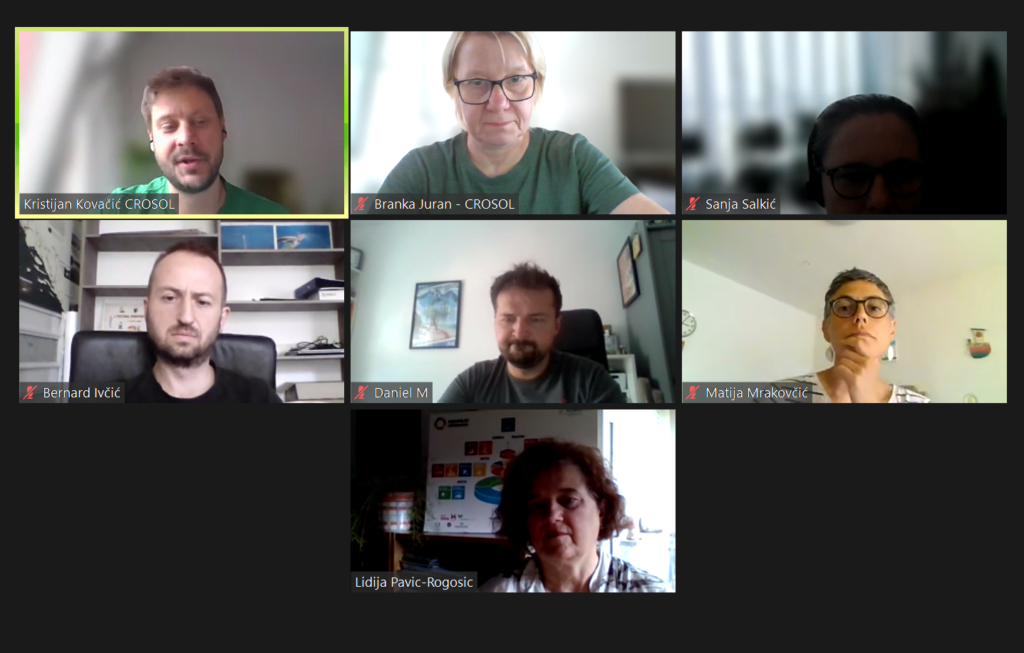
As part of the EU-funded project “Empowering Ecosystems of Civil Society Organisations in the Czech Republic, Slovakia, Croatia and Slovenia” (PROSECO), CROSOL – the Croatian Platform for International Citizen Solidarity – recently hosted an expert panel to assess the state of civic space and the enabling environment for civil society in Croatia.

The expert panel, held in June 2025, brought together experienced professionals and practitioners from civil society, academia and related fields to evaluate key dimensions affecting CSOs, including the regulatory environment, funding, participation in decision-making, safe operating conditions, and sector resilience. The panel applied a detailed methodology developed by PROSECO’s lead partner Glopolis, which captures both the legal framework and the actual experience of civil society actors on the ground.
Experts provided both quantitative scores and qualitative assessments across five key areas, highlighting persisting challenges such as administrative burdens, limited public funding stability, and uneven access to decision-making processes. At the same time, the panel acknowledged areas of improvement and the continued commitment of many CSOs to protect EU values and fundamental rights.

The expert assessment will serve as the basis for a comprehensive national report on the state of civic space in Croatia, to be published later this year. This report will feed into a broader regional analysis and contribute to a dialogue with policy-makers at both national and EU levels. The findings will also support CROSOL’s ongoing efforts to strengthen civil society resilience and foster a more enabling environment for democratic participation.
The PROSECO project is co-funded by the European Union through the Citizens, Equality, Rights and Values (CERV) programme and coordinated by Glopolis (CZ), in partnership with STEM (CZ), Malý Berlín (SK), the Peace Institute (SL), and CROSOL (HR).
The project is co-funded by the Office for Cooperation with NGOs of the Government of the Republic of Croatia.